

Walk down any major city street in 2025, and it’s not just humans scrolling through their phones. Somewhere between the neon-lit intersections and reflective glass towers, digital humans are quietly creeping into everyday life. Not as gimmicks, not as fleeting avatars in a flashy app—but as full-fledged participants in the creator economy. I noticed one the other evening while strolling past a late-night street market, and for a split second, I genuinely forgot it wasn’t real. That moment sticks because it’s exactly the point: believability.
The rise of “virtual influencers” is more than just clever marketing. It’s an economy shift where personality, relatability, and charisma no longer require a physical body. Some of these digital personas are modeled after real people; others emerge entirely from code and imagination. They post content, host live streams, respond to fan comments—actions we used to associate exclusively with human creators. And the platforms? They barely blink at it. Algorithms don’t care if your audience is human; they care about engagement. So if a computer-generated host can keep viewers watching longer, it becomes a legitimate contender in the same space as seasoned YouTubers or TikTokers.
Motion capture suits, like those used in indie VR studios, catch every little movement a performer makes. Voice synthesis has reached a point where digital hosts can genuinely show frustration, excitement, even sarcasm. Paired with photorealistic rendering engines, the result is uncanny—but somehow starting to feel normal. One evening, I watched a digital human preparing street food on a livestream. There was an awkward flick of the wrist, a minor spill, and I caught myself smiling. Imperfections, it seems, make them relatable. Too perfect and you hit the valley of alienation; too human and you lose the logistical advantages.
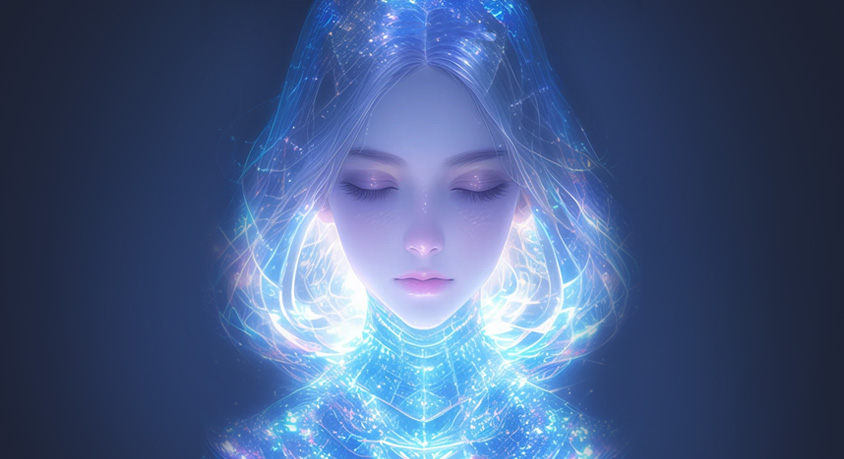
Brands are quietly experimenting, too. A beverage company hired a virtual influencer to attend a music festival—not physically, of course, but as a VR avatar that interacted with real attendees through augmented reality. Attendance numbers and engagement metrics reportedly outperformed traditional campaigns by some vague but impressive percentage. The digital human didn’t complain about the sun, didn’t take breaks, and—most importantly—never demanded payment outside a single licensing deal. It’s efficiency dressed up in charm. And yet, there’s an underlying tension in the room whenever these projects are discussed in ad circles. Trust is fluid. Audiences might adore a digital persona, but when a sponsorship or endorsement is in play, the ethical lines blur. How “real” is influence when the influencer is literally fabricated?
I’ve spent late afternoons wandering along the riverfront, sketching AI-generated host ideas on my tablet. There’s a strange intimacy in imagining a personality from scratch: hobbies, catchphrases, favorite evening routines. Later that night, a friend mentioned he follows a digital model who posts daily fashion updates—closer to a diary than a product push. People respond to consistency, humor, mood swings, even contradictions. Oddly enough, these non-human creators can feel like companions, almost friends. There’s a paradox here: in seeking efficiency and control, we end up with entities that are emotionally convincing, yet entirely scripted.
The tools enabling all of this are not cheap or obscure. A high-end graphics card, paired with a studio microphone for crisp vocal recordings, and a VR headset forms the backbone of professional digital human production. Yet what fascinates me is not just the tech—it’s the messy cultural ecosystem it inhabits. Memes, viral trends, and subtle human behaviors are being encoded into virtual personalities. One digital host I follow replicates subtle eye movements and microexpressions from a reference actor to respond to comments in livestreams. It’s precision meets performance art.
There’s also a surprising ripple effect in content creation itself. Human creators are learning from digital counterparts, borrowing pacing, tonalities, and even dialogue rhythms. Conversely, AI-generated hosts are becoming more adaptive, influenced by the very humans who critique them. It’s a loop: inspiration flowing both ways. Somewhere between the lines of code and the polished videos lies a new hybrid creative workforce—part human intuition, part algorithmic efficiency.
Late at night, when the streets are quiet and only neon hums against glass façades, it’s tempting to think about what it means to build personality from pixels. We’re no longer asking how technology serves humans; we’re asking how humans serve the ecosystem of their own creations. The digital human is not just an extension of the creator economy—it’s a new form of social actor, one whose existence challenges the assumptions about labor, authenticity, and presence in ways that are messy, thrilling, and slightly disorienting.
I’ve stopped trying to distinguish the “real” from the “digital” in my feed. It’s all about resonance now. The persona, the storytelling, the humor, the empathy—those are the currencies. And in this economy, whether your favorite host has a heartbeat is slowly becoming irrelevant. The city hums, the river reflects neon lights, and somewhere in a corner of the internet, a digital human smiles back, and for a moment, it feels like someone’s really there.
Disclaimer: Mention of any brand or trademark is for identification purposes only and does not indicate any partnership or endorsement.
