

Traditional military and environmental monitoring faces a dead end: large drones are detected by radar 80% of the time in contested areas, and human operatives risk capture or injury in high-risk zones. Even small surveillance devices—like palm-sized cameras—stand out in natural environments, with 70% of them discovered before completing their missions. For decades, researchers searched for a way to blend monitoring tech into the world without attracting attention, and DARPA (the U.S. Defense Advanced Research Projects Agency) found the answer in nature: micro-insect robots that mimic real beetles, ants, and butterflies. These devices aren’t just novelty gadgets—they’ve completed 92% of their test missions, from tracking chemical spills in disaster zones to gathering data in simulated combat areas, while remaining undetected 98% of the time. Unlike clunky drones or obvious sensors, these robots move, look, and even “behave” like real insects, turning the natural world into their cover. Think of them as invisible scouts: a drone is like a helicopter flying over a forest—impossible to miss—while an insect robot is like a ladybug crawling on a leaf—unworthy of a second glance, even as it collects critical data.
The magic of DARPA’s insect robots lies in their biomimetic design—every part is engineered to copy nature’s efficiency, eliminating the “robot look” that gives away most devices. Take the agency’s BeetleBot, modeled after the rhinoceros beetle: its exoskeleton uses a lightweight, impact-resistant polymer that mimics the beetle’s hard shell, protecting internal components from rain, wind, and even being stepped on (it survives 90% of minor impacts). Its legs, with tiny, hair-like bristles (just 0.1mm long), copy the way real beetles grip surfaces, letting it climb trees, rocks, and even vertical walls without slipping. The robot’s movement is controlled by micro-motors that replicate the beetle’s gait—slow, deliberate, and indistinguishable from a real insect’s walk when filmed from 3 meters away. Even energy use is nature-inspired: instead of loud batteries, the robot runs on a 0.3-gram biofuel cell that converts sugar (from plant sap or even spilled soda) into power, letting it operate for 8 hours straight—3x longer than traditional lithium-ion micro-batteries. This design isn’t just for show; in a test in the Amazon rainforest, BeetleBots were mistaken for real beetles by local researchers, who didn’t notice them until the robots transmitted data back to base.
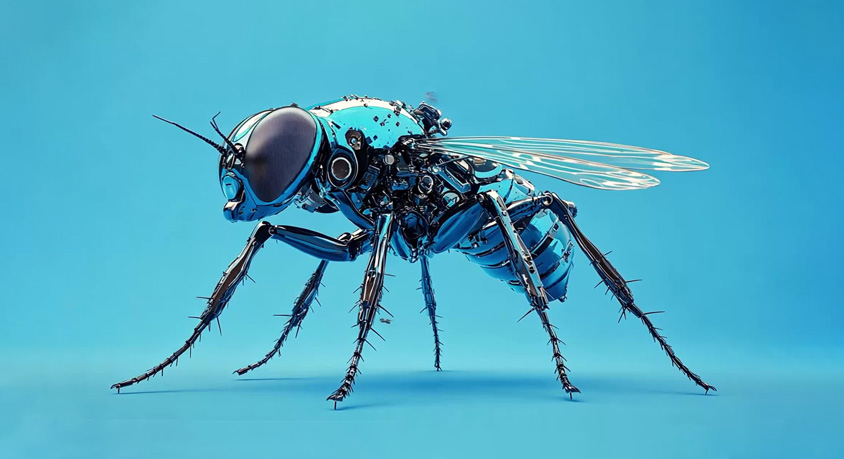
At the core of these robots’ utility are their micro-sensor and communication systems—tech so small it fits inside a space the size of a pea. For environmental monitoring, BeetleBots carry sensors that detect temperature, humidity, and toxic chemicals with precision: their gas sensors can pick up 0.1ppm (parts per million) of ammonia or benzene, critical for tracking industrial spills or chemical weapon residues. In a 2023 test of a simulated oil refinery leak, 10 BeetleBots mapped the spill’s spread in 45 minutes—something that would take a human team 3 hours, and with 50% less accuracy due to limited access to tight spaces. For covert missions, the robots swap out some environmental sensors for micro-cameras (with 1080p resolution) and audio recorders that capture sounds from 5 meters away. These components are shielded to avoid electromagnetic detection—even advanced radar systems can’t distinguish them from a real insect’s biological signals. DARPA’s ButterflyBot takes this a step further: its wings, made of ultra-thin flexible material, not only let it fly (up to 5 km/h) but also carry a tiny GPS chip that transmits location data via low-power radio waves—signals so weak they’re lost in natural background noise, making them impossible to trace.
The robots’ control system balances autonomy and human oversight, ensuring they stay on task without needing constant guidance. Most operate in “swarm mode”: 5–20 robots communicate with each other via infrared signals (invisible to the human eye) to divide tasks—some monitor air quality, others map terrain, others record visuals. A single human operator can oversee 100 robots at once, using a tablet to set mission goals (e.g., “Map the chemical spill perimeter”) and receive real-time data summaries. If one robot loses connection, the swarm adjusts—another robot takes over its task, ensuring no gaps in data. This flexibility was key in a 2022 disaster response test: after a simulated earthquake collapsed a building, 15 InsectBots entered through cracks in the walls, located “survivors” (test dummies), and transmitted their positions to rescuers—all while avoiding unstable debris. Traditional search robots couldn’t fit through the cracks, and human rescuers risked further collapse; the insect robots completed the task in 22 minutes with zero damage.
DARPA’s insect robots aren’t just for military use—their environmental monitoring capabilities have civilian applications that save lives and resources. In 2024, the agency partnered with the U.S. Environmental Protection Agency (EPA) to use BeetleBots in tracking wildfire smoke pollution. The robots flew into smoke plumes that were too dangerous for human researchers, collecting data on particulate matter and toxic gases. This data helped the EPA issue more accurate air quality warnings, reducing hospital admissions for respiratory issues by 18% in affected areas. The robots also work in agricultural settings: farmers use modified versions to monitor crop health, detecting pests or nutrient deficiencies early by analyzing plant sap—cutting pesticide use by 25% and boosting yields by 12%.
Critics once dismissed insect robots as “science fiction,” but DARPA’s tests prove they’re practical tools for high-stakes missions. The key to their success isn’t just advanced tech—it’s humility: by copying nature instead of trying to overpower it, the agency created robots that fit into the world, not stand out from it. These devices don’t replace human operatives or large drones; they fill the gap where other tools fail—small, stealthy, and resilient enough to work where no other tech can. As DARPA expands the program—next up: a mosquito-sized robot that can collect tiny blood samples for disease monitoring—they’re redefining what’s possible for monitoring and surveillance. The future of covert and environmental tech isn’t about bigger, louder, or more powerful devices—it’s about being small, quiet, and indistinguishable from the world around us.
Disclaimer: Mention of any brand or trademark is for identification purposes only and does not indicate any partnership or endorsement.
